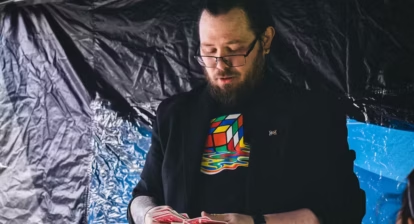
A support group can feel very different from a party. People may arrive quietly, know only one or two faces in the room, or be carrying worries that do not disappear at the door. That is why inclusive entertainment for support groups needs more than a few impressive tricks. It needs kindness, good judgement and moments of fun that allow everyone to take part in their own way.
The right entertainment does not put people on the spot or demand that they become the loudest person in the room. Instead, it creates a shared moment of wonder. A coin vanishes, a thought is revealed, a card appears somewhere impossible – and suddenly there is a reason for strangers to smile at one another. For a community gathering, charity event or regular support circle, that connection can be every bit as valuable as the applause.
Why inclusive entertainment matters for support groups
Support groups bring together people for many reasons: carers needing a breather, parents sharing experiences, bereavement groups, wellbeing sessions, disability organisations, community lunches and charity gatherings. There is no single type of audience, and no single approach that suits every room.
What people often share is a need to feel welcome without pressure. Entertainment can gently change the atmosphere of a meeting, especially when conversation feels difficult at first. A warm, interactive magic performance gives people something positive to respond to together. It creates natural chat afterwards too: “How did that happen?” is an easy opening line when people are not sure what else to say.
Magic works particularly well because it can be enjoyed at different levels. One guest may want to volunteer, another may prefer to watch from their chair, and someone else may simply enjoy the laughter around them. All three are taking part. Inclusion is not about making everyone do the same thing. It is about making sure nobody feels left out.
What makes entertainment genuinely inclusive?
A good performance begins before the first trick. The organiser and entertainer should have a simple, honest conversation about the group: who is attending, the size and layout of the venue, any mobility or sensory considerations, and the general mood of the occasion. A lively fundraising afternoon needs a different feel from a small carers’ coffee morning.
Participation should always feel optional
Audience participation brings magic to life, but it should be an invitation, not an instruction. The best moments happen when a volunteer is comfortable and receives genuine encouragement from the room. If someone would rather stay seated or simply watch, that choice should be respected without comment.
An experienced entertainer can involve a whole table with a shared choice, a group prediction or a visual surprise, rather than relying on one person being brought to the front. This is especially helpful for guests who are shy, anxious, have limited mobility or do not enjoy being the focus of attention.
Clear, friendly communication helps everyone
Fast, complicated patter can leave people behind. Simple language, a clear pace and visual magic make a great difference. Effects using colourful objects, cards, coins or everyday items can be easy to follow without needing a long explanation.
It also helps when the performer speaks to adults as adults and avoids talking down to anyone. A warm joke is lovely. A joke at a guest’s expense is not. The aim is shared laughter, never embarrassment.
Sensory needs deserve thought
Not every group wants loud music, sudden bangs or a high-energy stage show. For some audiences, a calmer close-up performance is far more enjoyable. Gentle moments of amazement can still feel exciting without overwhelming the room.
This is where tailoring matters. Lighting, background noise, space between tables and the length of the performance can all affect how comfortable people feel. If a group includes people who may need to step out, move around or take a quiet break, the entertainment should allow that naturally.
Choosing the right format for the gathering
There is no need for a big stage or a packed hall for magic to work. In fact, some of the most memorable reactions happen when a small mystery unfolds right under someone’s nose.
For a regular support group meeting, close-up magic around tables is often a lovely fit. Guests can chat, have a cuppa and enjoy short moments of magic in smaller groups. Nobody has to sit through a formal show, and the performer can adjust the pace to suit the room.
For a charity lunch, community celebration or larger social event, a short interactive parlour-style show can give everyone a shared focal point. This works well when organisers want to bring the room together before food, during an interval or as a cheerful finish to the day.
Family support events may suit a mixed-age performance, where children, parents, grandparents and carers can all enjoy the same experience. The magic should feel family-safe without becoming childish for the adults. A well-chosen routine lets children gasp while grown-ups are just as puzzled.
Keefo Magic can tailor close-up magic, parlour-style performances and interactive moments for community events across Llanelli, Swansea, Kidwelly and wider South and West Wales, with the group’s comfort kept firmly at the heart of the plan.
Inclusive entertainment for support groups is not one-size-fits-all
It can be tempting to book the longest show available and hope it fills the programme. Usually, a better question is: what will help this particular group feel most at ease?
A 20-minute performance may be ideal if guests are meeting for the first time or if attention can vary. A longer session can work brilliantly for a celebration where people have settled in and want a main event. Some groups will love plenty of cheerful audience interaction; others will prefer close-up magic that appears in little bursts between conversations.
Timing matters as well. Entertainment at the very beginning can break the ice, but it may feel too much for guests who need time to arrive and settle. Placing it after refreshments often gives people a chance to find their feet. At the end of a meeting, a short magical moment can send people home on a lighter note. It depends on the purpose and rhythm of the day.
Practical details that help organisers feel confident
A welcoming experience is built on practical planning as much as performance. Let the entertainer know the venue size, expected numbers, seating arrangement and whether there is a microphone available. Share any access information in advance, including step-free entry, room layout and parking considerations where relevant.
It is also useful to explain the group’s boundaries. Perhaps photographs are not appropriate, names should not be used, or certain themes need to be avoided. A professional entertainer will welcome that information. It is not about making the event complicated; it is about allowing everyone to relax.
For groups involving children or vulnerable people, organisers may also want reassurance around safeguarding and insurance. Asking those questions is sensible. Clear arrangements, respectful conduct and appropriate public liability cover help make an event feel safe as well as enjoyable.
If refreshments, speakers or activities are planned, leave a little breathing room around the entertainment. People need time to talk, visit facilities or simply take in what they have seen. Magic is most effective when it adds sparkle to the gathering rather than competing with everything else on the timetable.
The moments people remember
The best reaction is not always the biggest gasp. Sometimes it is the quiet guest who starts chatting to the person beside them. Sometimes it is a carer laughing freely for the first time that week, or a child and grandparent trying to work out the same impossible card trick together.
Those moments cannot be forced, but they can be invited. Inclusive entertainment gives a group permission to be playful for a while, without needing to explain themselves or perform for anyone else. It reminds people that joy is allowed in serious spaces too.
When planning your next support group gathering, choose entertainment that leaves room for every person in the room: the eager volunteer, the careful observer and the guest who only begins to smile when they see everyone else smiling first.